
Connect With Us
The Current

Our Insights

June 28, 2026

Inflation Hits a High as Housing Affordability Bill Stalls at Trump’s Desk

U.S. consumers are facing renewed pressure as inflation reaches its highest level in three years while housing affordability remains a major economic challenge. A bipartisan housing reform package to

STORY OF THE WEEK

Inflation Hits a High as Housing Affordability Bill Stalls at Trump’s Desk

Inflation pressures return as limited housing supply and higher borrowing costs weigh on the economy.
Inflation Hits a High as Housing Affordability Bill Stalls at Trump’s Desk

U.S. consumers are facing renewed pressure as inflation reaches its highest level in three years while housing affordability remains a major economic challenge. A bipartisan housing reform package to increase supply and lower costs has been delayed after President Trump canceled a signing ceremony, creating uncertainty around one of Washington’s biggest affordability efforts. The housing bill aims to address the shortage by speeding up construction approvals, expanding affordable housing programs, improving access to financing, and limiting some institutional investors from purchasing single family homes.

The delay comes as higher prices, elevated mortgage rates, and limited housing supply continue pressuring consumers and businesses. Economists argue that increasing housing supply is one of the biggest solutions because limited inventory has kept home prices elevated. The inflation challenge is also affecting companies, as higher costs for housing, transportation, and goods pressure consumer spending forcing businesses to adjust pricing.

  • Inflation has climbed to a three-year high at 4.2%, putting more pressure on household budgets.

  • The legislation focuses on increasing housing supply by reducing barriers to new construction.

  • Trump pushed Congress to pass the SAVE America Act, creating a delay in moving the housing measure forward while pressuring Congress to act.

The combination of persistent inflation and a housing shortage creates a difficult environment for consumers, businesses, and policymakers. While the housing bill could help improve affordability over time, higher costs remain a challenge in the near term.


CLIMBS OF THE WEEK

What's Up in the Markets

What's Up in the Markets

BB (+35.7%): Raised its outlook as stronger expectations for cybersecurity growth and AI opportunities fueled the rally.

WEN (+14.7%): A new meme stock emerges from r/WallStreetBets, as a crowd of Reddit users flooded to the depressed restaurant chain.

CAT (+1.2%): AI infrastructure demand boosted expectations for power generation equipment and data center expansion.

SLIDES OF THE WEEK

What's Down in the Markets

What's Down in the Markets

SPCX (-17.2%): Continues to fall out of orbit as investors questioned its high valuation and future growth potential after a strong initial offering.

PLTR (-11.8%): Set a 52-week low as the sell off continued as concerns around EU Government Contracts weighed on the highly valued software giant.

AAPL (-4.6%): Raised prices on Macs and iPads driven by memory prices, causing investors to worry about higher costs could hurt consumer demand.

CHART OF THE WEEK

Crypto Funds Face Record Outflows

Cryptocurrency funds are facing their longest stretch of withdrawals in months as investor

Crypto Funds Face Record Outflows

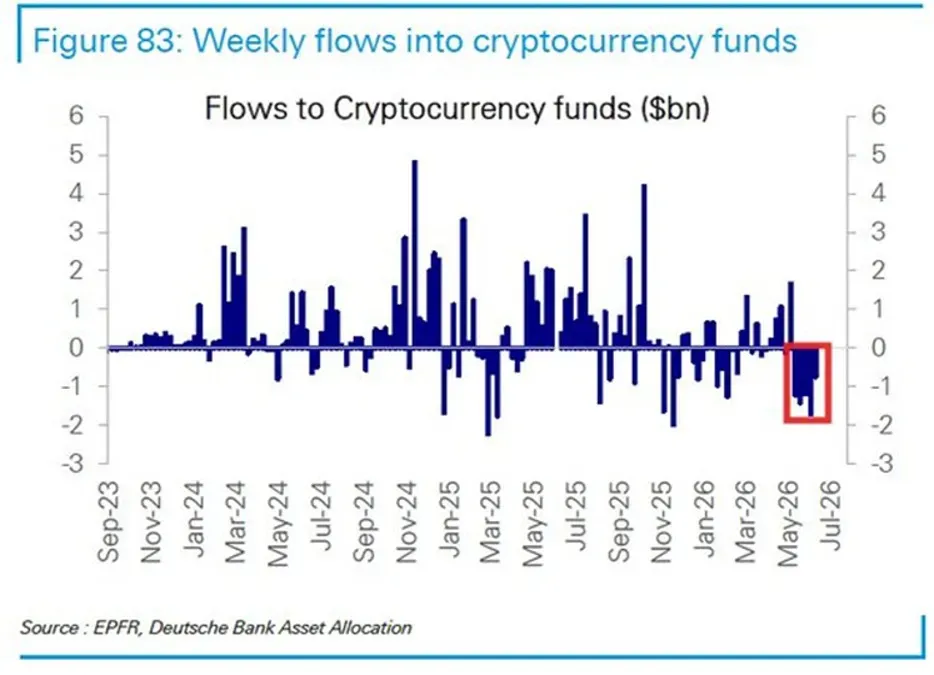
Cryptocurrency funds are facing their longest stretch of withdrawals in months as investor sentiment turns more cautious. Bitcoin ETFs recorded $6.4 billion in outflows over the last 30 days, marking the largest withdrawal period over that timeframe on record. The recent selling pressure reflects a shift from the strong demand that fueled crypto markets throughout 2025, with weekly outflows continuing for five straight weeks.

The decline in fund flows shows investors are becoming more selective toward digital assets as risk appetite weakens. Twelve-month cumulative inflows have fallen to $5.0 billion, the lowest level since August 2025 and down sharply from the $10.0 billion peak reached in October. As a percentage of assets under management, inflows have dropped from 16% in April to roughly 7%, signaling that momentum behind crypto investment has cooled. Whether this marks a temporary pullback or the start of a broader shift in investor behavior will be a key trend to watch.

The Current