
Connect with Us
The Current

Our Insights

March 29, 2026

The War in Iran is Driving the Stock Market Correction

**The War in Iran is Driving the Stock Market Correction **

STORY OF THE WEEK

The War in Iran is Driving the Stock Market Correction

How Tehran's only leverage is rewriting Wall Street's expectations
The War in Iran is Driving the Stock Market Correction

**The War in Iran is Driving the Stock Market Correction **

The biggest oil shock in history is unfolding in a 21-mile-wide waterway, and financial markets are paying the price. Since the U.S. and Israel began striking Iran on February 28, shipping through the Strait of Hormuz has virtually ground to a halt, cutting off the roughly 20% of global oil supply that once flowed freely through it. Oil prices have surged nearly 40%, with Brent and WTI both hovering around $100 per barrel, and the resulting uncertainty has helped push equity markets into correction territory.

President Trump has issued at least four ultimatums demanding Iran fully open the strait, threatening strikes "20 times harder" and even promising to obliterate Iranian power plants. Each deadline has passed with little compliance, and each has quietly been walked back. The latest extension gives Iran until April 6 to negotiate.

Iran, meanwhile, has held firm. It is exercising effective veto power over who passes, limiting traffic to "friendly countries" and pre-approved vessels, and is now charging ships a fee for passage. A small convoy passed this week under Pakistan's flag as mediator, which Trump described as a sign of progress.

The market implications are severe. BlackRock CEO Larry Fink has warned oil could hit $150 per barrel and trigger a global recession if the strait remains restricted after hostilities end.

  • ~100 ships per day transited pre-war; traffic is now a fraction of that.

  • Oil up ~40% since February 28, currently ~$100/barrel.

  • $150/barrel is Fink's recession threshold if the blockade holds.

With no clean resolution in sight, markets remain on edge. A deal is possible but fragile, and every passing day of restricted passage adds more pressure to energy markets, supply chains, and investor confidence worldwide.

CLIMBS OF THE WEEK

What's Up in the Markets

What's Up in the Markets

ADM** **(+9.1%): Middle East conflict disrupts global grain trade and Strait of Hormuz tanker traffic. It is expected that the supply rerouting will boost near-term profits significantly.

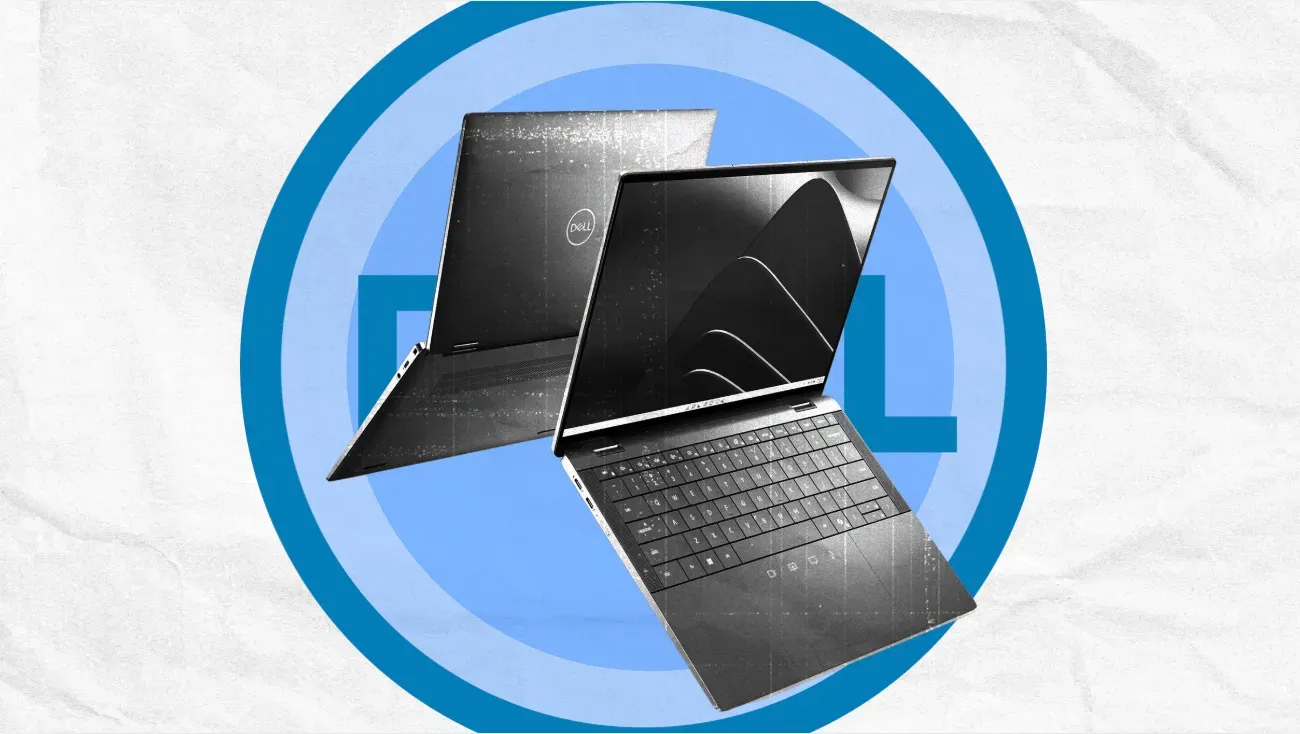
DELL (+8.9%): Dell’s biggest rival in the AI server space, Super Micro Computer (SMCI), is currently in a tailspin. Federal charges were recently filed against SMCI’s co-founder for allegedly smuggling $2.5B worth of AI servers to China in violation of export controls.

FANG (+4.8%): Investors look to natural gas companies strongly positioned to capitalize on the rising oil prices as the conflict in the Middle East continues.

SLIDES OF THE WEEK

What's Down in the Markets

What's Down in the Markets

CRCL** **(-25.7%): A draft of the Clarity Act would only permit stablecoin rewards on activity, not balances, in a blow to Circle's model. The bill remains stalled over banking opposition, DeFi oversight, and Democratic demands.

MU (-15.5%): AI-driven DRAM demand has been fully priced in. Risks include order concentration, potential overordering, and a Google algorithm that could reduce memory needs.

META (-11.4%): Two jury verdicts — $375M for child exploitation failures and $4.2M for addiction liability, the latter drawing "Big Tobacco" comparisons with billions more in potential suits. Meta's $135B AI infrastructure spend also has Wall Street nervous given the $80B metaverse loss.

CHART OF THE WEEK

Software Companies Are Starting to Fear Their Future

Just two years ago, not a single public software company flagged AI agents as a competitive threat

Software Companies Are Starting to Fear Their Future

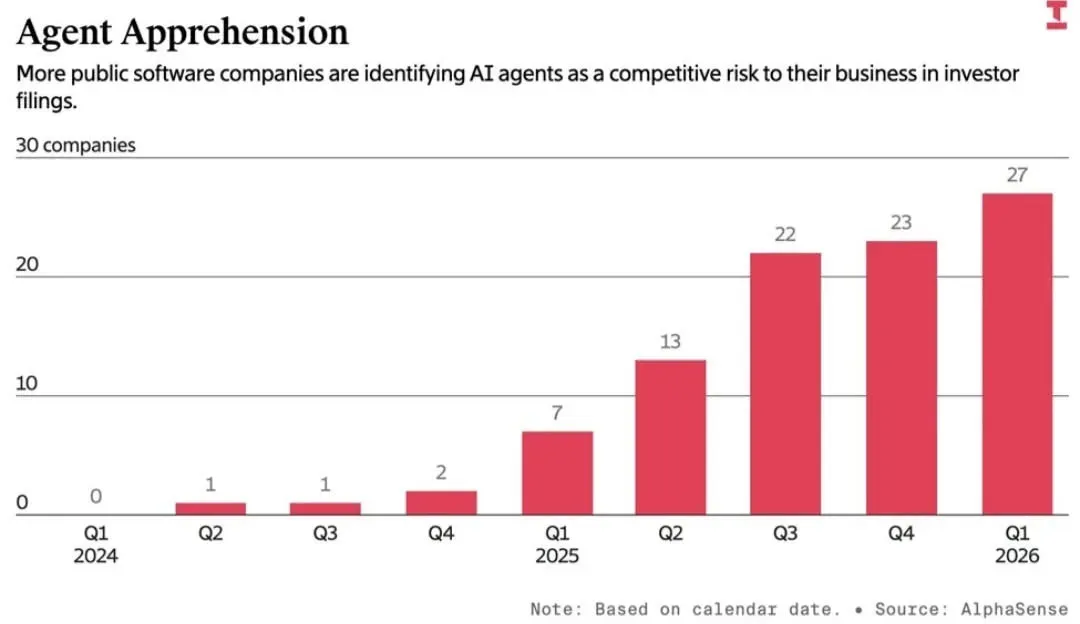
Just two years ago, not a single public software company flagged AI agents as a competitive threat in their investor filings. By Q1 2026, 27 were doing so. The chart tells a story of slow recognition turning into rapid alarm: from zero mentions in early 2024 to single digits by year-end, then a sharp inflection point in Q1 2025 as large language models matured and agentic capabilities became commercially viable.

The concern is straightforward: AI agents increasingly perform tasks that software products were built to facilitate, threatening subscription revenue, user engagement, and long-term moats. That fear spilled into markets this week, contributing to broad pullbacks across SaaS and cybersecurity stocks. For investors, the filing trend is worth watching closely as a proxy for how seriously the industry is taking the disruption it helped create.

The Current