

STORY OF THE WEEK
SpaceX Sends their Registration Statement into Orbit
The S-1 filed with the SEC this week reveals a profitable satellite business funding AI buildouts, with interplanetary ambitions.
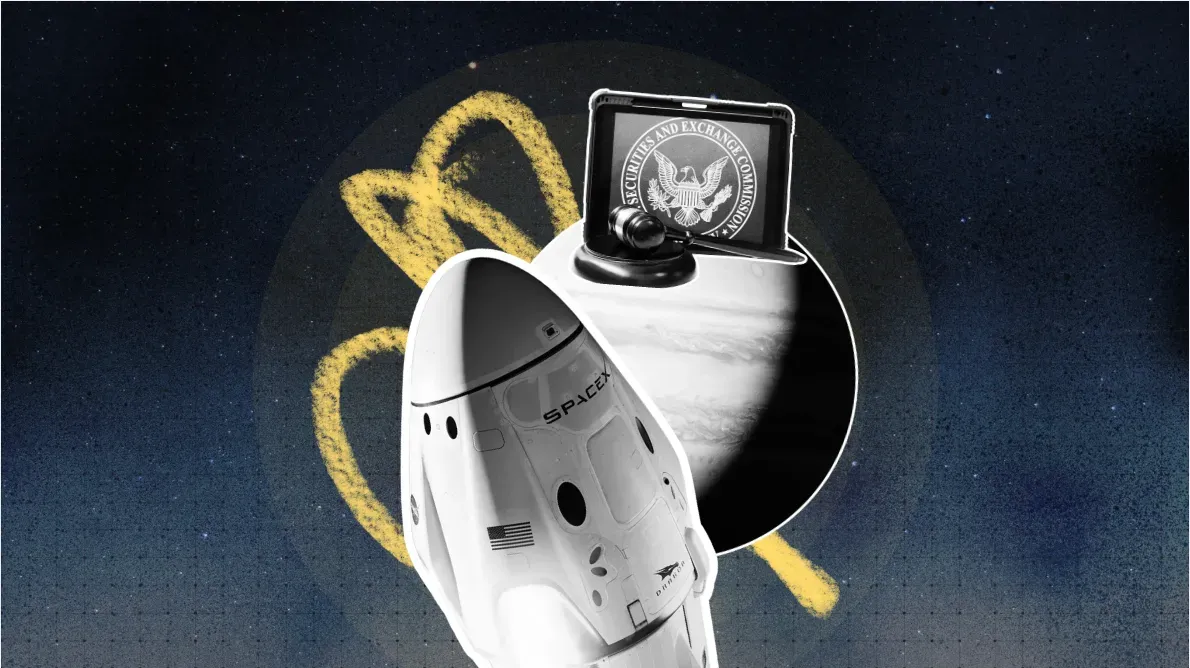
Starlink is the story inside the S-1. SpaceX's satellite internet business generated $11.4 billion in revenue and $7.2 billion in adjusted EBITDA in 2025, with operating income more than doubling year over year as subscriber growth and enterprise adoption scaled. That profitability is what makes the rest of the company possible as it covers the $657 million operating loss in the space segment and funding an aggressive push into territory most aerospace companies have never entered.
That territory is AI. SpaceX is pitching itself not as a rocket company with a side business, but as a future platform for orbital computing infrastructure, ultimately deploying solar-powered AI compute capacity in space to sidestep terrestrial energy and cooling constraints. The ambition comes at a cost: the AI segment posted a $6.4 billion operating loss on $3.2 billion in revenue in 2025, with capital expenditures reaching $12.7 billion. On a consolidated basis the company swung from a $791 million profit in 2024 to a net loss of nearly $5 billion, a trajectory that frames the IPO as a long-duration bet on technologies the filing itself acknowledges may take decades to prove out.
Musk holds 85.1% of voting power through a dual-class structure; Class A public shareholders cannot remove him as CEO, CTO, or chairman.
Consolidated adjusted EBITDA of $6.6 billion masks a $2.6 billion operating loss and a net loss of nearly $5 billion driven by $12.7 billion in AI capex.
Federal agencies represent roughly a fifth of total revenue, a concentration that ties financial performance directly to Musk's political standing in Washington.
The filing targets a June 12 Nasdaq debut at a valuation of $1.75 to $2 trillion, which would rank as the largest IPO in market history. Bulls see Starlink's cash generation as a durable foundation; skeptics see a multiple running decades ahead of any orbital AI revenue.