
Connect with Us
The Current

Our Insights

February 1, 2026

Sharp AI Divide Between Meta and Microsoft

AI investment produced sharply different outcomes for Meta and Microsoft, sending a clear message that investors are no longer rewarding AI ambition alone—they now want proof that massive capital outlays are translating into near-term earnings power.

STORY OF THE WEEK

Sharp AI Divide Between Meta and Microsoft

AI investment is no longer judged by scale, but by returns

Sharp AI Divide Between Meta and Microsoft

Artificial intelligence spending produced sharply different outcomes for two mega-cap leaders: Meta Platforms and Microsoft. The divergence sent a clear message that investors are no longer rewarding AI ambition alone. They now want proof that massive capital outlays are translating into near-term earnings power.

Meta delivered that proof. Strong guidance and 24% YoY revenue growth, driven largely by advertising, reassured investors that its AI investments are already improving monetization. Despite announcing plans to spend $115 billion to $135 billion on AI this year, nearly double last year, markets focused on execution rather than cost. Shares surged, adding roughly $176 billion in market value.

Microsoft's results landed very differently. Azure cloud growth slowed slightly, while capital expenditure jumped 66%, raising concerns that profitability is being deferred even as spending accelerates. Although AI demand and backlog remain strong, investors reacted to margin pressure, capacity constraints, and the growing gap between investment and payoff.

What's the key takeaway?

  • Meta demonstrated visible revenue and earnings leverage from AI.
  • Microsoft highlighted rising costs and delayed returns.
  • The market rewarded monetization and punished uncertainty.

What unsettled investors was not AI demand, which remains robust, but timing. The episode reinforced that markets are shifting from rewarding vision to demanding financial delivery.


CLIMBS OF THE WEEK

What's Up in the Markets

DECK, RCL, and VZ led the way higher this week

What's Up in the Markets

DECK (+19.3%): Deckers Outdoor surged after a strong Q3 earnings beat and raised FY2026 guidance, driven by continued momentum at HOKA and UGG that reinforced confidence in brand-led growth despite modest margin pressure.

RCL (+13.6%): Royal Caribbean Cruises surged after strong earnings and upbeat guidance, as robust booking trends and onboard spending fueled optimism for accelerating growth into 2026.

VZ (+12.7%): Verizon climbed after strong subscriber additions and upbeat profit and free cash flow guidance, driven by aggressive promotions and improved wireless and broadband momentum.

SLIDES OF THE WEEK

What's Down in the Markets

CVNA, SOFI, and APP led the decline this week

What's Down in the Markets

CVNA (-15.3%): Carvana shares fell after a short seller alleged overstated earnings and heavy reliance on related-party transactions, reviving accounting concerns after the stock's sharp rally.

SOFI (-11.8%): SoFi Technologies fell despite a strong beat and raised guidance, as investors focused on dilution risk from recent $3.2B capital raises and a stretched valuation after last year's rally.

APP (-9.8%): AppLovin fell after investors cut risk amid macro pressure and a short-seller dispute, with uncertainty lingering ahead of upcoming earnings and guidance.

CHART OF THE WEEK

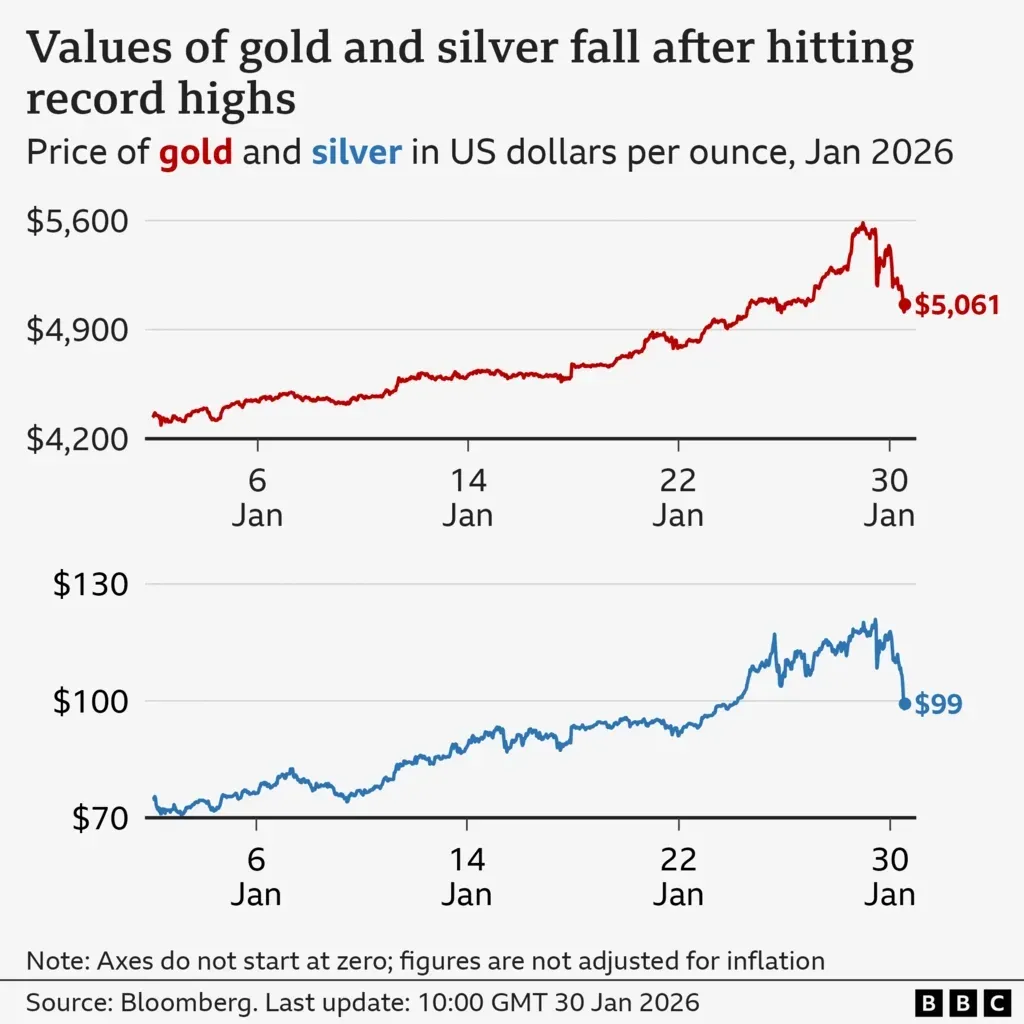
Gold Hits Record Highs as Tariffs and Geopolitics Roil Markets

Gold and silver suffered one of their sharpest sell-offs in years this week

Gold Hits Record Highs as Tariffs and Geopolitics Roil Markets

Gold and silver suffered one of their sharpest sell-offs in years this week, abruptly reversing a rally that had pushed prices to record highs. Gold fell as much as 8%, crashing through $5,000 per ounce, while silver plunged more than 26% toward $95, capping a period of extreme volatility across metals markets.

The catalyst was a sharp rebound in the U.S. dollar following reports that Kevin Warsh is set to be nominated as Federal Reserve chair by Donald Trump. Dollar strength undercut metals prices, which had benefited from expectations of currency weakness and looser policy. At the same time, Chinese regulators moved to cool speculative excess after heavy retail and institutional buying drove prices higher.

Copper and platinum also sold off, underscoring how crowded positioning had become. Technical indicators had already warned of a correction, with gold's relative-strength index reaching extreme levels. Even after the pullback, gold and silver remain sharply higher year to date, highlighting how fast the prior move had been and how quickly sentiment can turn.

The Current