

Connect With Us
The Current

Our Insights

October 11, 2026

STORY OF THE WEEK

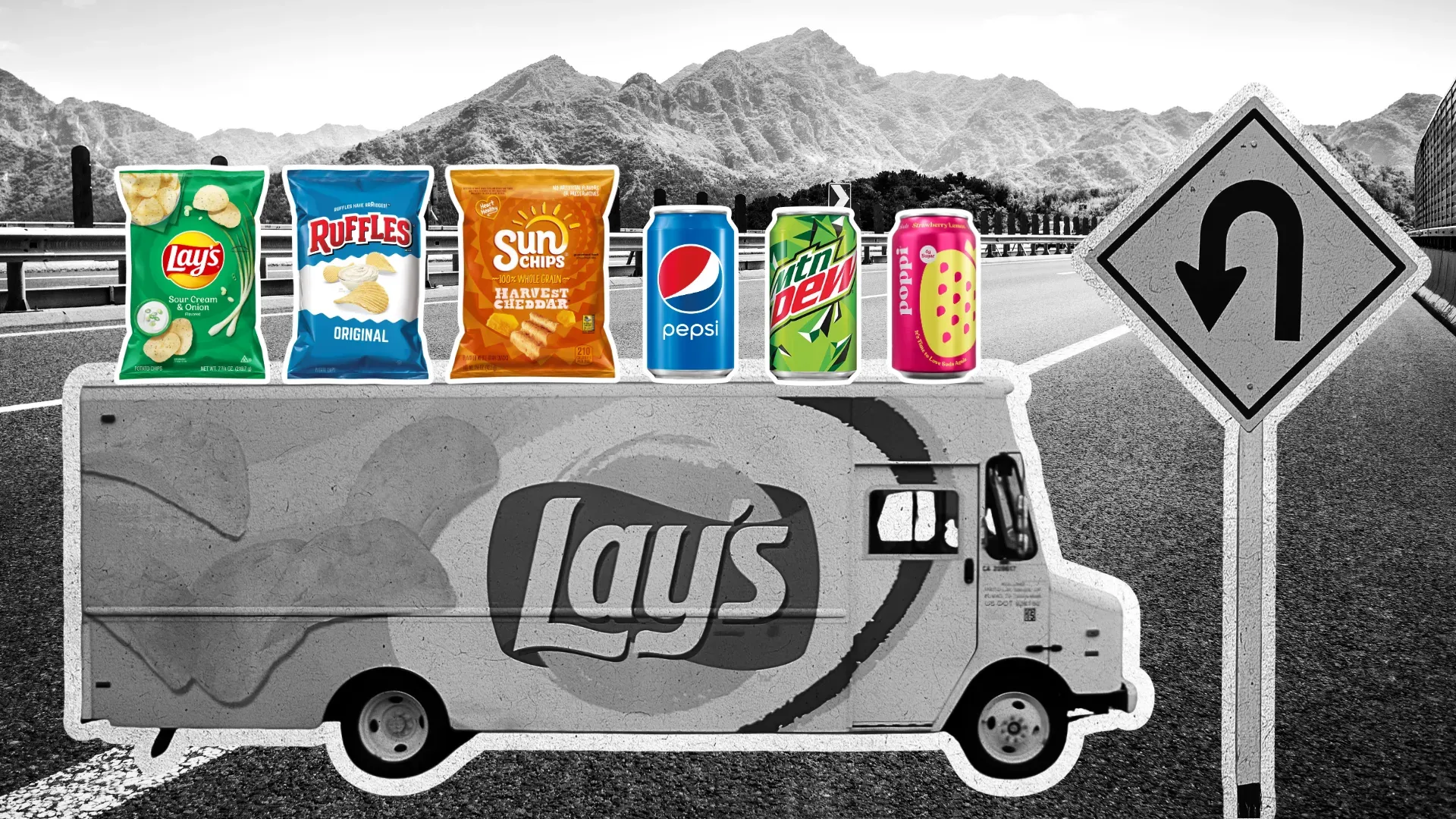
Pepsi is Taking a U-Turn

PepsiCo’s previous price reductions are being re-evaluated as part of their new turnaround plan.
Pepsi is Taking a U-Turn

Earlier this year, PepsiCo cut prices by up to 15% on snacks like Lay’s and Doritos after customers pushed back on earlier price increases. The cuts brought some shoppers back, but North America still came in weaker than expected. Higher gas prices have also kept people out of convenience stores this year, where many snacks and drinks are bought on impulse. Frito-Lay snack volumes were flat, and drink volumes fell -2% as sodas like Pepsi lost ground to competitors.

Now PepsiCo is changing course. It plans small price increases on Doritos, Ruffles, SunChips and some sodas because of higher costs, though prices will stay below January levels. With support from activist investor Elliott Management, it also plans to cut about 20% of its products by early 2027. CEO Ramon Laguarta made drinks a top priority, saying, “We don’t feel good about the beverage business.” The company will cut costs elsewhere and reinvest the savings in Pepsi, Mountain Dew and Poppi.

  • Revenue rose 5.6% to $25.3 billion, ahead of the $25 billion forecast.

  • The company lowered its full-year earnings growth forecast from its earlier target of 5% to 7%.

  • Snack volumes in Asia Pacific are up about 11%, outrunning North America.

Raising prices again is a risky balance, since the customers PepsiCo just won back could walk away. Last quarter’s profit also got a one-time boost from tariff refunds that isn’t recurring. Investors seemed willing to give PepsiCo time, sending the stock up about 4% after the report. The coming quarters will show whether shoppers accept higher prices and whether a smaller, more focused lineup can turn things around.

CLIMBS OF THE WEEK

What's Up in the Markets

What's Up in the Markets

PINS (+11.2%): Pinterest rose after launching a new AI tool that turns users saved hair and nail ideas into salon-ready plans, with price ranges and upkeep tips.

RBLX (+9.0%): Roblox rose this week as its large and growing user base, including being the world’s most-downloaded mobile game in August, helped the stock recover from a steep drop earlier this year.

WMT (+6.8%): Walmart rose after announcing plans to expand its drone delivery service to Denver and Seattle, adding to its growing network of cities.

SLIDES OF THE WEEK

What's Down in the Markets

What's Down in the Markets

INTC (-12.2%): Intel fell after Elon Musk said he is in talks with rival chipmaker TSMC about joining his Texas chip project, which Intel had been expected to help build.

VZ (-9.3%): Verizon fell after SpaceX agreed to buy a large block of wireless airwaves to turn its Starlink Mobile service into a major U.S. phone carrier, a direct new competitor for Verizon.

UAL (-4.5%): United Airlines fell as oil prices climbed above $100 a barrel and rival Delta cut its profit forecast because of rising fuel costs.

CHART OF THE WEEK

From the NFL to MIT: A Former Lineman Solves a Decades-Old Math Problem

From the NFL to MIT: A Former Lineman Solves a Decades-Old Math Problem

John Urschel spent three seasons as an offensive lineman for the Baltimore Ravens before leaving the NFL in 2017 to study math full-time at MIT, where he is now a professor. This week, he published a paper proving a math problem that has been open since the 1990s, one he first became interested in as an undergraduate. It deals with Gaussian elimination, a method many people learn in high school for solving systems of equations. Take 2x – y = 0 and x + y = 3. Adding them together gives 3x = 3, so x equals 1 and y equals 2. Computers use the same basic method to solve much larger problems in nearly every field, from engineering to finance.

The problem is that computers round numbers slightly at each step. In a huge problem with thousands of steps, those small errors could, in theory, pile up and make the final answer useless. How much those numbers can grow during the process is called the “growth factor,” which is also the subject of Urschel’s paper, “On the Growth Factor of Random Matrices.” Mathematicians had long suspected that this kind of breakdown almost never happens with typical problems, but no one had proven it until now. Urschel credited OpenAI’s models with helping in his research, but he says AI hasn’t taken away his love of math: “I really want to understand the why of things. AI doesn’t ruin the why.”

The Current