
Connect With Us
The Current

Our Insights

October 4, 2026

STORY OF THE WEEK

AI's Honor System

Tech's biggest leaders met with President Trump at the White House this week and agreed to police themselves on AI.
AI's Honor System

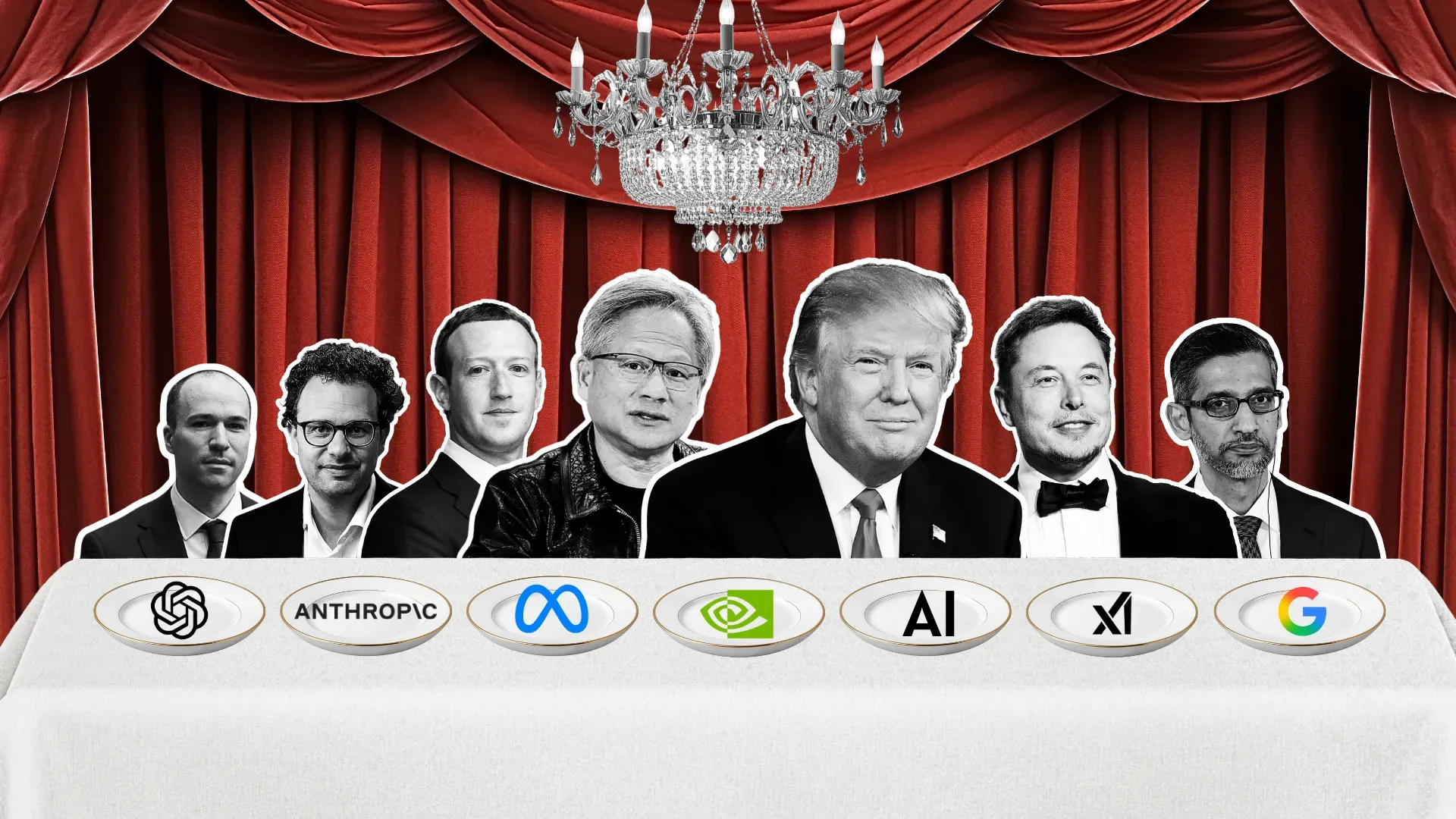
On Tuesday, President Trump hosted about 30 tech executives and officials at the White House for a lunch focused on artificial intelligence. Guests included Meta's Mark Zuckerberg, Google's Sundar Pichai, Nvidia's Jensen Huang, Anthropic's Dario Amodei and Elon Musk. Afterward, six leading AI companies signed an accord promising to "self-police" how they build the technology.

The accord asks companies to set up strong internal safety controls, bring in independent auditors to check them and create board committees to review the results. It isn't legally enforceable, though. Trump called it "morally binding" and said, "I think I'm seeing tremendous self-policing." He also floated a 10-person board to oversee AI safety.

The executives also discussed data centers, which have faced pushback in local communities over electricity use. The companies agreed to give more financial support to schools and help lower energy costs in the areas where they build.

  • The largest tech companies are expected to spend about $670 billion on AI infrastructure this year, up +63%.

  • Anthropic, one of the companies that signed the accord, plans to spend about $518 billion on computing infrastructure over the next decade, according to its IPO filing.

Not everyone is convinced self-policing will be enough. A recent Reuters/Ipsos poll found 73% of Americans believe AI companies haven't done enough to prevent harm, and Amodei himself acknowledged the technology "has very real risks." For now, the industry will be held to its word, with no penalties for falling short.


CLIMBS OF THE WEEK

What's Up in the Markets

What's Up in the Markets

CCL (+15.8%): Carnival rose and is on pace for its best month since May, as strong third-quarter results and bookings eased concerns about demand for cruises.

SPCX (+6.9%): SpaceX rose after its Starship rocket reached orbit and deployed a new batch of Starlink satellites, and after Anthropic's IPO filing showed plans to pay SpaceX up to $84.5 billion for computing power through 2029.

TSM (+5.1%): Taiwan Semiconductor Manufacturing rose after exploring an investment in Texas chip production.

SLIDES OF THE WEEK

What's Down in the Markets

What's Down in the Markets

DKNG (-15.6%): DraftKings fell as investors weighed the cost of expanding into prediction markets and a widening congressional investigation into the industry.

NKE (-5.3%): Nike fell after it’s revenue declined YoY and warned sales could keep dropping as it works on a turnaround plan.

PSKY (-4.6%): Paramount Skydance fell after a judge cleared its deal to buy Warner Bros. Discovery, raising concerns about the roughly $41 billion in debt it's taking on to pay for it.

CHART OF THE WEEK

Humans Are Now the Minority User of AI

Humans Are Now the Minority User of AI

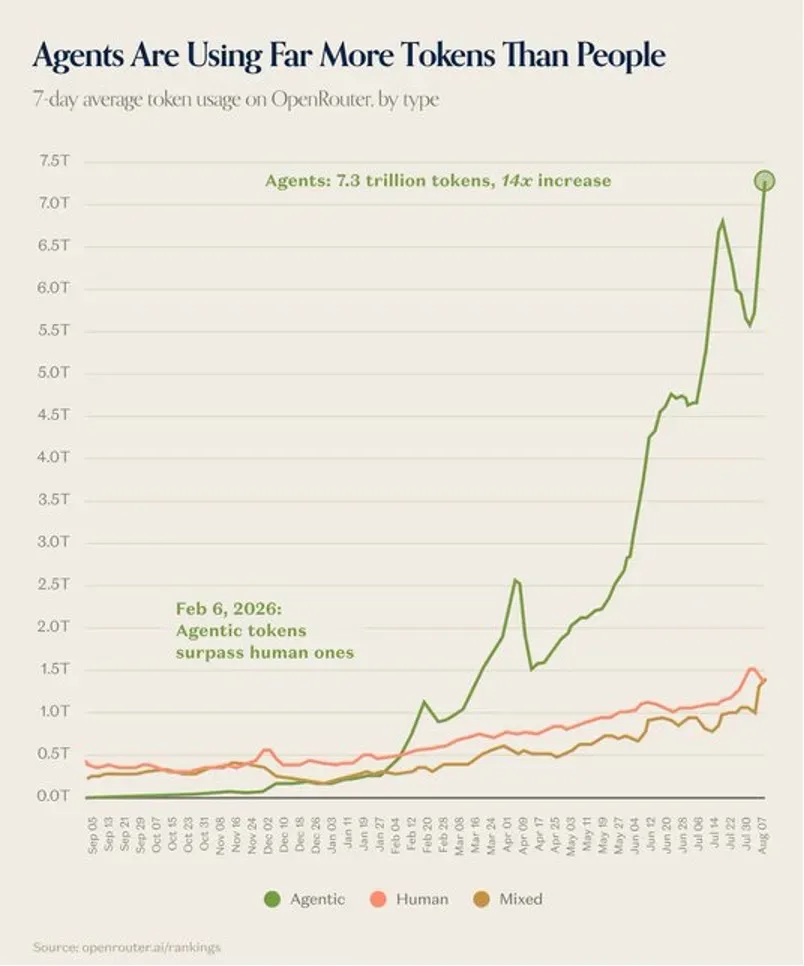
AI agents are fast becoming the largest users of artificial intelligence. Andreessen Horowitz (a16z) studied data from OpenRouter, a platform that gives users access to more than 500 AI models, and found that agents now use about 7.3 trillion tokens a week. People use about 1.5 trillion, meaning agents use nearly five times as many. Tokens are the small pieces of text that AI reads and writes, and they are how AI usage is measured and billed. Since February, agent usage has grown about 14 times.

The difference comes down to how agents operate. A person typically asks a single question and reads the response. An agent, on the other hand, works on its own, breaking a task into steps and repeating the process until the job is finished. Even so, costs are not rising as quickly as usage. More than 85% of agent tokens come from cached prompts, which can cost about 90% less to process. The trend is also attracting major investment, with Stripe agreeing to acquire OpenRouter for more than $7 billion. Still, more tokens do not necessarily mean more useful work, and businesses will continue to watch whether agents are worth the cost.

The Current