
Connect with Us
The Current

Our Insights

March 8, 2026

Oil Shock Returns as U.S.-Iran War Rattles Markets

Joint U.S.-Israeli airstrikes began on February 28, targeting Iranian leadership and military infrastructure. The fallout was immediate. Vessels began avoiding the Strait of Hormuz after tankers came

STORY OF THE WEEK

Oil Shock Returns as U.S.-Iran War Rattles Markets

A strike on the world's most critical energy chokepoint forced every asset class to reprice at once

Oil Shock Returns as U.S.-Iran War Rattles Markets

Joint U.S.-Israeli airstrikes began on February 28, targeting Iranian leadership and military infrastructure. The fallout was immediate. Vessels began avoiding the Strait of Hormuz after tankers came under attack, producing an effective halt to traffic through the vital shipping lane. The disruption affected roughly 20% of global oil supplies transiting the strait, sending Brent crude from around $70 to over $90 per barrel within days.

Equity markets absorbed the shock unevenly. Airlines fell more than 5%, while the XOP energy ETF hit its highest level since June 2022. South Korea's KOSPI suffered its worst single-day drop since 2008, falling up to 12% and triggering a circuit breaker. Haven assets rallied, with gold and the dollar both strengthening throughout the week.

The central debate shifted to duration. A scenario with oil around $80 and a brief conflict was seen as manageable; a sustained move above $100 was described as "qualitatively different" with much larger global consequences.

  • Energy and defense surged; airlines and Asian markets bore the heaviest losses

  • Oil posted one of its largest weekly gains on record

  • Base case prices a short conflict; prolonged war risks materially worse outcomes

The week was a reminder that geopolitical shocks reprice risk faster than any earnings cycle can absorb.

CLIMBS OF THE WEEK

What's Up in the Markets

What's Up in the Markets

INTU (+17.6%): Intuit shares rose after strong QuickBooks and TurboTax demand drove a blowout quarter, with analysts pushing back against AI disruption fears that had weighed on the stock.

MRVL (+9.6%): Marvell shares surged after its data center business topped $6B in revenue, with the CEO projecting accelerating AI-driven growth through 2027 and dismissing any signs of a slowdown.

AVGO (+3.4%): Broadcom shares surged after CEO Hock Tan projected AI chip revenue well above $100B by 2027, allaying margin fears and convincing investors the company's custom silicon business has a durable, multi-year growth runway.

SLIDES OF THE WEEK

What's Down in the Markets

What's Down in the Markets

PSIX (-37.5%): Power Solutions International shares fell after gross margins compressed sharply to, as the company's accelerated push into data center power systems drove operating inefficiencies.

LITE (-20.3%): Lumentum shares fell after Broadcom's CEO argued copper interconnects would remain the preferred option for AI rack scaling for years, dimming near-term demand expectations for co-packaged optics technology.

AVAV** **(-9.3%): AeroVironment shares fell after Raymond James downgraded the, citing risk that its largest contract may be paused or split among new vendors, clouding near-term revenue visibility despite a broadly bullish defense tape.

CHART OF THE WEEK

Jobs Unexpectedly Crack as Headwinds Mount

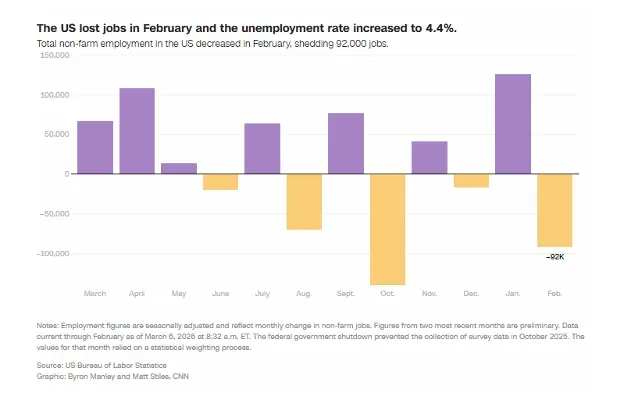
The February payrolls report delivered a jarring miss, with nonfarm payrolls falling 92,000 against

Jobs Unexpectedly Crack as Headwinds Mount

The February payrolls report delivered a jarring miss, with nonfarm payrolls falling 92,000 against expectations for a 50,000 gain, marking the third decline in five months. The headline was partly distorted by a Kaiser Permanente strike sidelining 30,000+ healthcare workers and severe winter weather, but economists still called it a poor number. Unemployment climbed to 4.4% while long-term unemployment duration hit its longest since December 2021.

The report lands at a difficult moment. Oil is surging on Iran conflict fears, tariff-driven inflation is already showing up in the Beige Book, and the labor market is now visibly softening. Fed officials reiterated a wait-and-see posture, though futures markets moved to price in the first cut by July, with two cuts now fully priced in by year-end.

The Current